The VSCOO Journal
Guides, tips, and expertise for brands building their knitwear collection.
From Sample to Finished Sweater: A Complete Look at the Knitwear Production Process
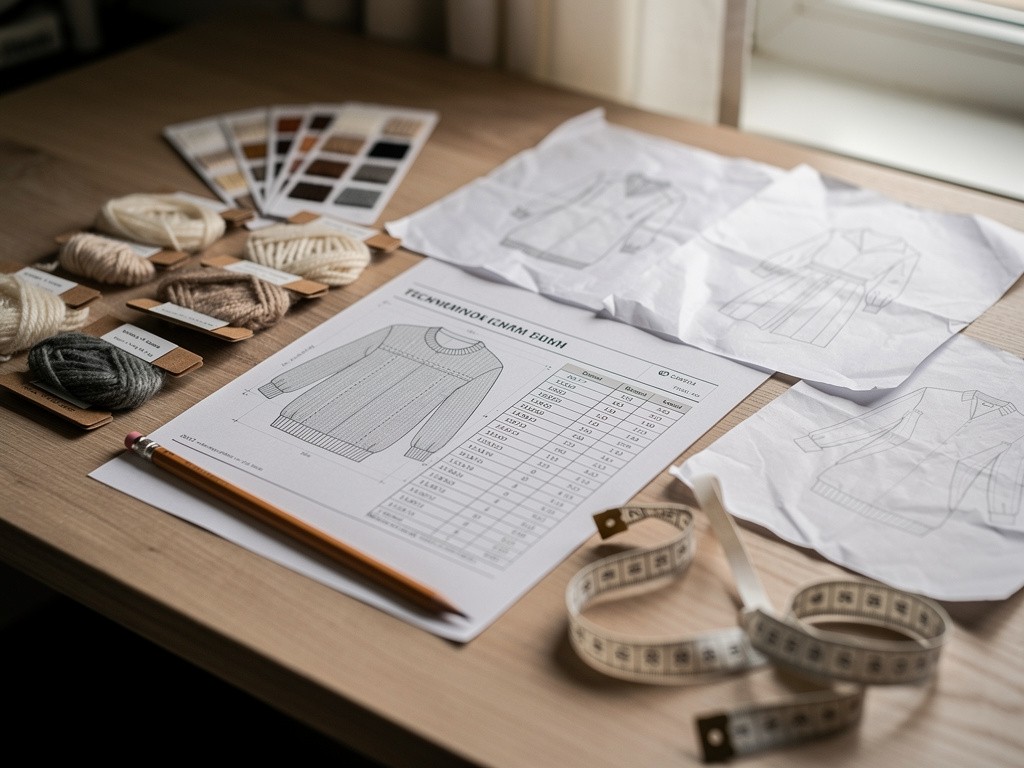
Ever wondered what actually happens between a sketch and the sweater that arrives at your door? Behind every well-made knit lies a detailed, multi-stage journey involving skilled hands, precise machines, and careful quality checks. Understanding this process not only demystifies how sweaters are made—it also helps brands set realistic timelines, communicate better with their factory, and make smarter production decisions. In this guide, we'll walk through the complete sweater production process, step by step, from the very first sample to the final finished piece.Step 1: Design and Tech Pack PreparationEvery sweater begins with a clear plan. Before any yarn is touched, the design is translated into a tech pack—a detailed specification document that includes measurements, stitch types, yarn composition, gauge, color codes, trims, labels, and construction notes.The tech pack is the shared language between the brand and the factory. The more precise it is, the fewer misunderstandings arise later. This stage sets the foundation for everything that follows, which is why experienced brands invest time here to get every detail right.Step 2: Yarn Selection and SourcingWith the design defined, the next step is selecting the right yarn. This involves choosing the fiber (such as cotton, wool, cashmere, or a blend), the weight, and the color. Yarn is the single biggest factor in how a sweater looks, feels, and performs, so this decision carries significant weight.At this stage, dye lots and color matching are confirmed against approved standards. The factory sources the yarn, and any lab dips (color samples) are checked and approved before moving forward.Step 3: Sampling and ApprovalThis is one of the most critical phases. Using the tech pack and selected yarn, the factory produces a sample—a first physical version of the sweater. The sample is used to check fit, measurements, stitch quality, hand-feel, and overall appearance.Samples often go through several rounds:· Proto sample — the first version to test the design and construction.· Fit sample — refined to perfect the measurements and fit.· Pre-production (PP) sample — the final approved version that represents exactly what mass production should look like.Only once the PP sample is approved does the order move into production. This step protects both the brand and the factory by confirming expectations before committing to full volume.Step 4: Knitting the PanelsWith the sample approved, production begins. Modern sweaters are typically knitted on computerized flat knitting machines, which produce the individual panels—front, back, sleeves, and collar—according to the programmed pattern and gauge.Depending on the design, sweaters may be fully fashioned (knitted to shape, with minimal cutting and waste) or cut and sewn (knitted as fabric, then cut to shape). Fully fashioned construction is often preferred for quality knitwear because it reduces waste and creates cleaner edges.Step 5: Linking and AssemblyOnce the panels are knitted, they need to be joined together. This is done through linking, a specialized process—often performed by skilled workers on a linking machine—where the knitted pieces are stitched together loop by loop for a smooth, durable, and nearly invisible seam.Assembly includes attaching sleeves, closing side seams, and adding collars, cuffs, and hems. The precision of this stage directly affects the sweater's final fit and appearance, making it one of the most craftsmanship-dependent steps in the entire process.Step 6: Washing, Steaming, and BlockingAfter assembly, sweaters go through washing and finishing to achieve their final hand-feel and appearance. Washing softens the fibers and can enhance texture, while steaming and blocking shape the garment to its correct measurements and give it a clean, professional finish.This stage is where a sweater truly takes on its intended look and drape. Proper finishing ensures consistency across every piece in the order.Step 7: Quality Control and InspectionQuality control runs throughout production, but a thorough final inspection is essential before shipping. Inspectors check measurements, stitch quality, seams, color consistency, and overall appearance, and look for any defects such as loose threads, holes, or irregularities.Many factories follow AQL (Acceptable Quality Limit) standards to systematically evaluate quality across a batch. Garments that don't meet standards are repaired or rejected. This step is the final safeguard that protects your brand's reputation.Step 8: Finishing, Labeling, and PackingIn the final stage, sweaters are trimmed, pressed, and fitted with all necessary labels, hangtags, and care instructions. They are then folded, poly-bagged, and packed according to the brand's specifications and shipping requirements.Proper labeling and packing aren't just about presentation—they also ensure compliance with import regulations and protect the garments during transit.How Long Does the Whole Process Take?Timelines vary depending on complexity, order quantity, and yarn availability, but sampling alone can take several weeks due to multiple approval rounds, while bulk production typically follows over a period of weeks after approval. Building realistic timelines into your planning—and communicating clearly with your manufacturer—helps ensure a smooth launch without last-minute pressure.Frequently Asked QuestionsWhy does sampling take so long?Sampling involves multiple rounds of refinement to perfect fit, measurements, and quality. Rushing this stage often leads to problems in bulk production, so it's worth the time.What's the difference between fully fashioned and cut-and-sewn sweaters?Fully fashioned sweaters are knitted to shape with minimal waste and cleaner edges, while cut-and-sewn sweaters are cut from knitted fabric. Fully fashioned is often associated with higher-quality knitwear.What is a PP sample?A pre-production sample is the final approved reference that represents exactly how bulk production should look. Production only begins after it's signed off.Can I visit or monitor the production process?Many factories welcome communication and updates throughout production, and a transparent partner like VSCOO will keep you informed at every key stage.From First Stitch to Final PieceA great sweater is the result of many careful steps working in harmony—from a precise tech pack and the right yarn, through meticulous sampling, knitting, linking, finishing, and inspection. Understanding this journey helps you appreciate the craftsmanship behind every piece and work more effectively with your manufacturing partner.Ready to bring your sweater design to life? Get in touch for a quote and let's start the process together.
Latest Articles
Jacquard, Intarsia, and Printing: What's the Difference in Sweater Patterns?
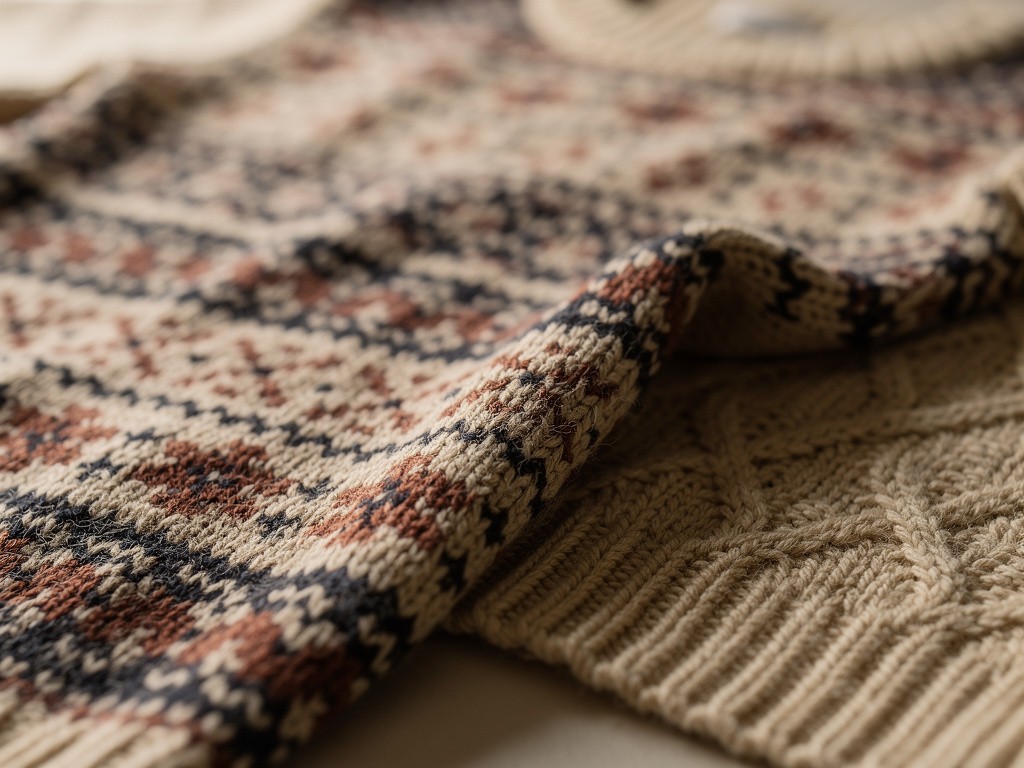
When you fall in love with a patterned sweater—whether it's a bold geometric design, a colorful holiday motif, or a striking graphic—there's a good chance one of three techniques brought that pattern to life: jacquard, intarsia, or printing. While the finished results can look similar at a glance, the methods behind them are fundamentally different, and each affects the sweater's appearance, feel, cost, and durability in distinct ways. Understanding these differences helps brands choose the right technique for their design and set the right expectations from the start. Let's break down each one.What Is Jacquard Knitting?Jacquard is a knitting technique where multiple yarn colors are worked into the fabric at the same time to create a pattern. Instead of adding color after the fact, the design is built directly into the knit structure as the sweater is made.Because more than one color is knitted across each row, the yarns not currently showing on the front are carried along the back of the fabric. These carried yarns are called floats. This is the tell-tale sign of jacquard: turn the sweater inside out, and you'll typically see the "reverse" of the pattern along with these floating strands.Key characteristics of jacquard:· The pattern is knitted into the fabric itself, making it durable and integrated.· It works beautifully for repeating patterns—such as Fair Isle, geometric motifs, snowflakes, and small all-over designs.· The reverse side shows floats, and the fabric is often slightly thicker and warmer because of the multiple yarns.· Best suited for designs with a limited, repeating color palette.What Is Intarsia Knitting?Intarsia is also a color-knitting technique, but it works quite differently from jacquard. Instead of carrying yarns across the entire row, intarsia uses separate blocks of color, each with its own yarn, joined together only where the colors meet.This means there are no floats on the back—the reverse side looks much cleaner, and the fabric stays a single, consistent thickness. Intarsia is the go-to technique when you want large, distinct areas of color.Key characteristics of intarsia:· Ideal for large color blocks, bold graphics, single motifs, and picture-like designs (think a single large logo, an argyle pattern, or a big graphic image).· No floats on the back, so the fabric is not thicker and the reverse is neat.· Each color area uses its own yarn, making it a more labor-intensive and often more premium technique.· Best when the design has clearly separated color zones rather than intricate repeats.What Is Printing on Sweaters?Printing is entirely different from the two knitting methods above. With printing, the sweater (or its panels) is knitted first—usually in a solid color—and the design is then applied onto the surface of the finished knit fabric. Common methods include screen printing, heat-transfer printing, and digital printing.Because the pattern sits on top of the fabric rather than being knitted in, printing offers the most freedom for complex, detailed, or photographic designs that would be impossible or impractical to knit.Key characteristics of printing:· Allows for highly detailed, multi-color, gradient, or photographic designs with almost no limits on complexity.· The design sits on the surface, so it doesn't add warmth or thickness the way knitted color does.· Generally faster and more cost-effective for intricate artwork, especially at scale.· Durability depends on the print method and quality—prints can potentially crack, fade, or peel over time if not done well, whereas knitted patterns are integrated into the fabric. Side-by-Side: How They CompareFeatureJacquardIntarsiaPrintingHow it's madeMultiple colors knitted together per rowSeparate color blocks knitted with own yarnsDesign applied onto finished knit surfaceBack of fabricFloats visibleClean, no floatsUnaffected (solid knit)Best forRepeating patterns, Fair Isle, small motifsLarge color blocks, bold single graphicsDetailed, multi-color, photographic artFabric thicknessSlightly thicker/warmerSame as base fabricSame as base fabricDesign complexityModerate, repeat-friendlyDistinct color zonesVirtually unlimitedDurabilityVery durable (knitted in)Very durable (knitted in)Depends on print qualityHow to Choose the Right TechniqueThe best choice depends on your design and priorities.Choose jacquard if your design features repeating patterns or small, allover motifs, and you want the warmth and integrated durability of a knitted-in design—classic Fair Isle sweaters are a perfect example.Choose intarsia if your design has large, bold blocks of color or a single standout graphic, and you want a clean reverse side and a premium, integrated finish without added bulk.Choose printing if your design is highly detailed, uses many colors or gradients, or is photographic in nature—situations where knitting the pattern would be impractical. It's also often the most efficient route for complex artwork.In some cases, brands even combine techniques—for example, a jacquard or intarsia base with a small printed detail—to achieve exactly the look they want.Frequently Asked QuestionsWhich technique is the most durable?Jacquard and intarsia are generally the most durable because the pattern is knitted directly into the fabric. Printing durability depends heavily on the method and quality of application.Is intarsia more expensive than jacquard?Intarsia is often more labor-intensive because each color block uses its own yarn and requires careful joining, so it can be more costly, especially for complex designs.Can I get a very detailed, colorful image on a sweater?Yes—printing is usually the best choice for highly detailed or photographic designs, since knitting such complexity is impractical.How do I know which technique suits my design?Share your design with your manufacturer. An experienced knitwear partner like VSCOO can advise on the most suitable technique based on your artwork, budget, and quality goals.The Right Pattern, The Right MethodJacquard, intarsia, and printing each bring patterns to life in their own way—jacquard weaves color into repeating knitted designs, intarsia creates bold, clean blocks of color, and printing opens the door to unlimited detail on the surface. Knowing the difference empowers you to design smarter, communicate clearly with your factory, and achieve the exact look and quality your brand deserves.Have a patterned sweater design in mind? Get in touch for a quote and let's find the perfect technique to bring it to life.
From Sample to Finished Sweater: A Complete Look at the Knitwear Production Process
Ever wondered what actually happens between a sketch and the sweater that arrives at your door? Behind every well-made knit lies a detailed, multi-stage journey involving skilled hands, precise machines, and careful quality checks. Understanding this process not only demystifies how sweaters are made—it also helps brands set realistic timelines, communicate better with their factory, and make smarter production decisions. In this guide, we'll walk through the complete sweater production process, step by step, from the very first sample to the final finished piece.Step 1: Design and Tech Pack PreparationEvery sweater begins with a clear plan. Before any yarn is touched, the design is translated into a tech pack—a detailed specification document that includes measurements, stitch types, yarn composition, gauge, color codes, trims, labels, and construction notes.The tech pack is the shared language between the brand and the factory. The more precise it is, the fewer misunderstandings arise later. This stage sets the foundation for everything that follows, which is why experienced brands invest time here to get every detail right.Step 2: Yarn Selection and SourcingWith the design defined, the next step is selecting the right yarn. This involves choosing the fiber (such as cotton, wool, cashmere, or a blend), the weight, and the color. Yarn is the single biggest factor in how a sweater looks, feels, and performs, so this decision carries significant weight.At this stage, dye lots and color matching are confirmed against approved standards. The factory sources the yarn, and any lab dips (color samples) are checked and approved before moving forward.Step 3: Sampling and ApprovalThis is one of the most critical phases. Using the tech pack and selected yarn, the factory produces a sample—a first physical version of the sweater. The sample is used to check fit, measurements, stitch quality, hand-feel, and overall appearance.Samples often go through several rounds:· Proto sample — the first version to test the design and construction.· Fit sample — refined to perfect the measurements and fit.· Pre-production (PP) sample — the final approved version that represents exactly what mass production should look like.Only once the PP sample is approved does the order move into production. This step protects both the brand and the factory by confirming expectations before committing to full volume.Step 4: Knitting the PanelsWith the sample approved, production begins. Modern sweaters are typically knitted on computerized flat knitting machines, which produce the individual panels—front, back, sleeves, and collar—according to the programmed pattern and gauge.Depending on the design, sweaters may be fully fashioned (knitted to shape, with minimal cutting and waste) or cut and sewn (knitted as fabric, then cut to shape). Fully fashioned construction is often preferred for quality knitwear because it reduces waste and creates cleaner edges.Step 5: Linking and AssemblyOnce the panels are knitted, they need to be joined together. This is done through linking, a specialized process—often performed by skilled workers on a linking machine—where the knitted pieces are stitched together loop by loop for a smooth, durable, and nearly invisible seam.Assembly includes attaching sleeves, closing side seams, and adding collars, cuffs, and hems. The precision of this stage directly affects the sweater's final fit and appearance, making it one of the most craftsmanship-dependent steps in the entire process.Step 6: Washing, Steaming, and BlockingAfter assembly, sweaters go through washing and finishing to achieve their final hand-feel and appearance. Washing softens the fibers and can enhance texture, while steaming and blocking shape the garment to its correct measurements and give it a clean, professional finish.This stage is where a sweater truly takes on its intended look and drape. Proper finishing ensures consistency across every piece in the order.Step 7: Quality Control and InspectionQuality control runs throughout production, but a thorough final inspection is essential before shipping. Inspectors check measurements, stitch quality, seams, color consistency, and overall appearance, and look for any defects such as loose threads, holes, or irregularities.Many factories follow AQL (Acceptable Quality Limit) standards to systematically evaluate quality across a batch. Garments that don't meet standards are repaired or rejected. This step is the final safeguard that protects your brand's reputation.Step 8: Finishing, Labeling, and PackingIn the final stage, sweaters are trimmed, pressed, and fitted with all necessary labels, hangtags, and care instructions. They are then folded, poly-bagged, and packed according to the brand's specifications and shipping requirements.Proper labeling and packing aren't just about presentation—they also ensure compliance with import regulations and protect the garments during transit.How Long Does the Whole Process Take?Timelines vary depending on complexity, order quantity, and yarn availability, but sampling alone can take several weeks due to multiple approval rounds, while bulk production typically follows over a period of weeks after approval. Building realistic timelines into your planning—and communicating clearly with your manufacturer—helps ensure a smooth launch without last-minute pressure.Frequently Asked QuestionsWhy does sampling take so long?Sampling involves multiple rounds of refinement to perfect fit, measurements, and quality. Rushing this stage often leads to problems in bulk production, so it's worth the time.What's the difference between fully fashioned and cut-and-sewn sweaters?Fully fashioned sweaters are knitted to shape with minimal waste and cleaner edges, while cut-and-sewn sweaters are cut from knitted fabric. Fully fashioned is often associated with higher-quality knitwear.What is a PP sample?A pre-production sample is the final approved reference that represents exactly how bulk production should look. Production only begins after it's signed off.Can I visit or monitor the production process?Many factories welcome communication and updates throughout production, and a transparent partner like VSCOO will keep you informed at every key stage.From First Stitch to Final PieceA great sweater is the result of many careful steps working in harmony—from a precise tech pack and the right yarn, through meticulous sampling, knitting, linking, finishing, and inspection. Understanding this journey helps you appreciate the craftsmanship behind every piece and work more effectively with your manufacturing partner.Ready to bring your sweater design to life? Get in touch for a quote and let's start the process together.