Jacquard, Intarsia, and Printing: What's the Difference in Sweater Patterns?
jacquard vs intarsia vs printing knitwear, sweater jacquard, intarsia knitting, printed sweaters, knitwear patterns, sweater design techniques
July 30, 2026
jacquard vs intarsia vs printing knitwear, sweater jacquard, intarsia knitting, printed sweaters, knitwear patterns, sweater design techniques
July 30, 2026
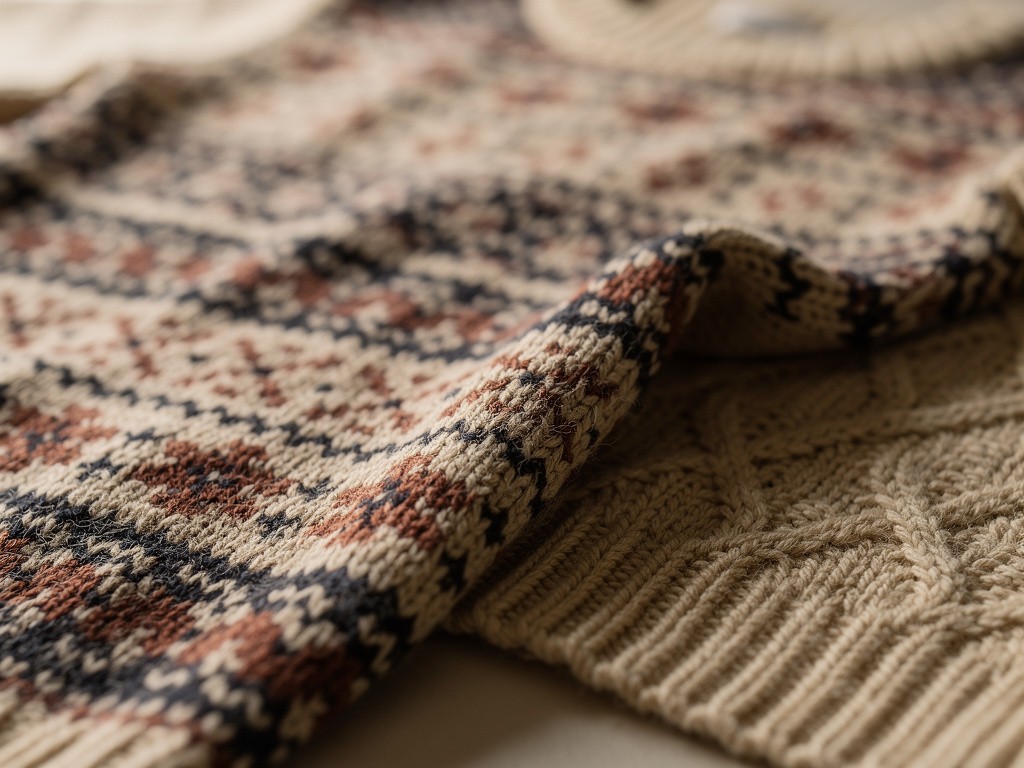
When you fall in love with a patterned sweater—whether it's a bold geometric design, a colorful holiday motif, or a striking graphic—there's a good chance one of three techniques brought that pattern to life: jacquard, intarsia, or printing. While the finished results can look similar at a glance, the methods behind them are fundamentally different, and each affects the sweater's appearance, feel, cost, and durability in distinct ways. Understanding these differences helps brands choose the right technique for their design and set the right expectations from the start. Let's break down each one.
Jacquard is a knitting technique where multiple yarn colors are worked into the fabric at the same time to create a pattern. Instead of adding color after the fact, the design is built directly into the knit structure as the sweater is made.
Because more than one color is knitted across each row, the yarns not currently showing on the front are carried along the back of the fabric. These carried yarns are called floats. This is the tell-tale sign of jacquard: turn the sweater inside out, and you'll typically see the "reverse" of the pattern along with these floating strands.
Key characteristics of jacquard:
· The pattern is knitted into the fabric itself, making it durable and integrated.
· It works beautifully for repeating patterns—such as Fair Isle, geometric motifs, snowflakes, and small all-over designs.
· The reverse side shows floats, and the fabric is often slightly thicker and warmer because of the multiple yarns.
· Best suited for designs with a limited, repeating color palette.
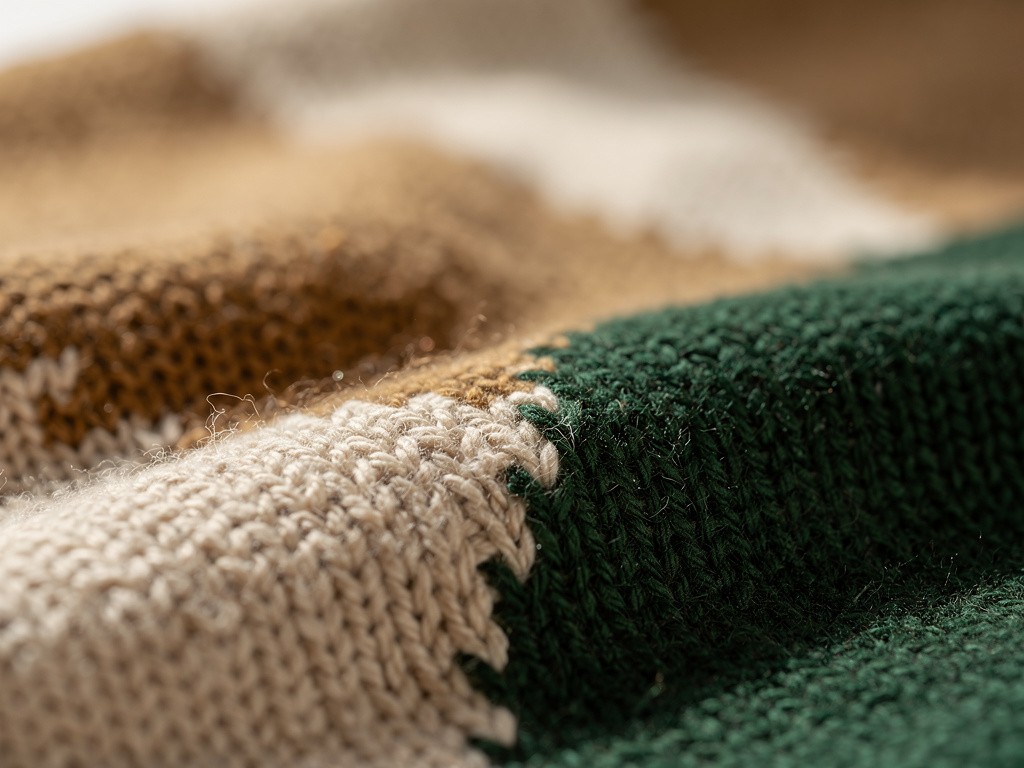
Intarsia is also a color-knitting technique, but it works quite differently from jacquard. Instead of carrying yarns across the entire row, intarsia uses separate blocks of color, each with its own yarn, joined together only where the colors meet.
This means there are no floats on the back—the reverse side looks much cleaner, and the fabric stays a single, consistent thickness. Intarsia is the go-to technique when you want large, distinct areas of color.
Key characteristics of intarsia:
· Ideal for large color blocks, bold graphics, single motifs, and picture-like designs (think a single large logo, an argyle pattern, or a big graphic image).
· No floats on the back, so the fabric is not thicker and the reverse is neat.
· Each color area uses its own yarn, making it a more labor-intensive and often more premium technique.
· Best when the design has clearly separated color zones rather than intricate repeats.
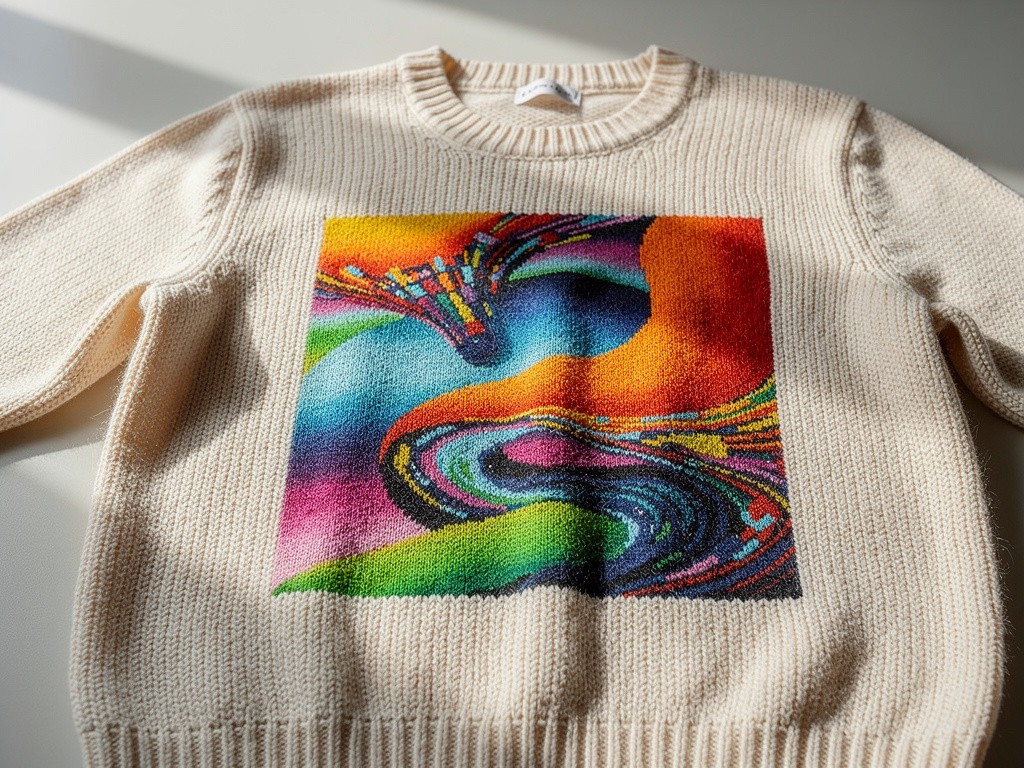
Printing is entirely different from the two knitting methods above. With printing, the sweater (or its panels) is knitted first—usually in a solid color—and the design is then applied onto the surface of the finished knit fabric. Common methods include screen printing, heat-transfer printing, and digital printing.
Because the pattern sits on top of the fabric rather than being knitted in, printing offers the most freedom for complex, detailed, or photographic designs that would be impossible or impractical to knit.
Key characteristics of printing:
· Allows for highly detailed, multi-color, gradient, or photographic designs with almost no limits on complexity.
· The design sits on the surface, so it doesn't add warmth or thickness the way knitted color does.
· Generally faster and more cost-effective for intricate artwork, especially at scale.
· Durability depends on the print method and quality—prints can potentially crack, fade, or peel over time if not done well, whereas knitted patterns are integrated into the fabric.
| Feature | Jacquard | Intarsia | Printing |
| How it's made | Multiple colors knitted together per row | Separate color blocks knitted with own yarns | Design applied onto finished knit surface |
| Back of fabric | Floats visible | Clean, no floats | Unaffected (solid knit) |
| Best for | Repeating patterns, Fair Isle, small motifs | Large color blocks, bold single graphics | Detailed, multi-color, photographic art |
| Fabric thickness | Slightly thicker/warmer | Same as base fabric | Same as base fabric |
| Design complexity | Moderate, repeat-friendly | Distinct color zones | Virtually unlimited |
| Durability | Very durable (knitted in) | Very durable (knitted in) | Depends on print quality |
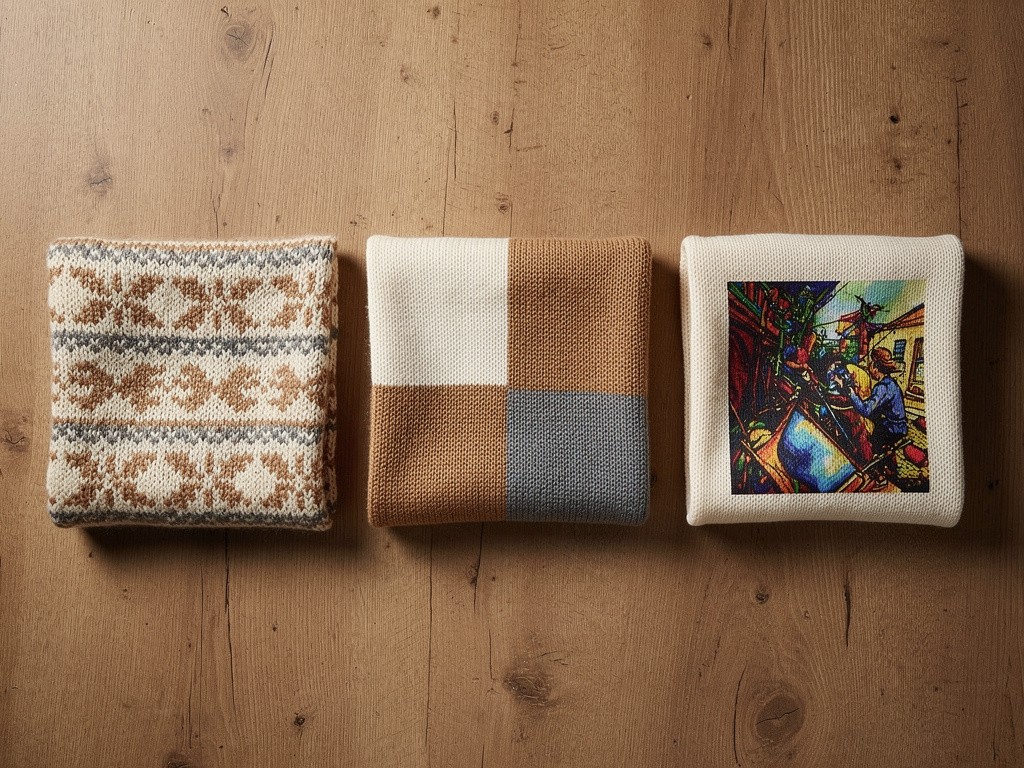
The best choice depends on your design and priorities.
Choose jacquard if your design features repeating patterns or small, allover motifs, and you want the warmth and integrated durability of a knitted-in design—classic Fair Isle sweaters are a perfect example.
Choose intarsia if your design has large, bold blocks of color or a single standout graphic, and you want a clean reverse side and a premium, integrated finish without added bulk.
Choose printing if your design is highly detailed, uses many colors or gradients, or is photographic in nature—situations where knitting the pattern would be impractical. It's also often the most efficient route for complex artwork.
In some cases, brands even combine techniques—for example, a jacquard or intarsia base with a small printed detail—to achieve exactly the look they want.
Which technique is the most durable?
Jacquard and intarsia are generally the most durable because the pattern is knitted directly into the fabric. Printing durability depends heavily on the method and quality of application.
Is intarsia more expensive than jacquard?
Intarsia is often more labor-intensive because each color block uses its own yarn and requires careful joining, so it can be more costly, especially for complex designs.
Can I get a very detailed, colorful image on a sweater?
Yes—printing is usually the best choice for highly detailed or photographic designs, since knitting such complexity is impractical.
How do I know which technique suits my design?
Share your design with your manufacturer. An experienced knitwear partner like VSCOO can advise on the most suitable technique based on your artwork, budget, and quality goals.
Jacquard, intarsia, and printing each bring patterns to life in their own way—jacquard weaves color into repeating knitted designs, intarsia creates bold, clean blocks of color, and printing opens the door to unlimited detail on the surface. Knowing the difference empowers you to design smarter, communicate clearly with your factory, and achieve the exact look and quality your brand deserves.
Expert Custom Knitwear Manufacturer
MOQ 100 pcs/style. Response within 24 hours.
Get a Free Quote