From Sample to Finished Sweater: A Complete Look at the Knitwear Production Process
sweater production process, knitwear manufacturing, sweater sampling, how sweaters are made, from sample to production, knitwear factory process
June 8, 2026
sweater production process, knitwear manufacturing, sweater sampling, how sweaters are made, from sample to production, knitwear factory process
June 8, 2026
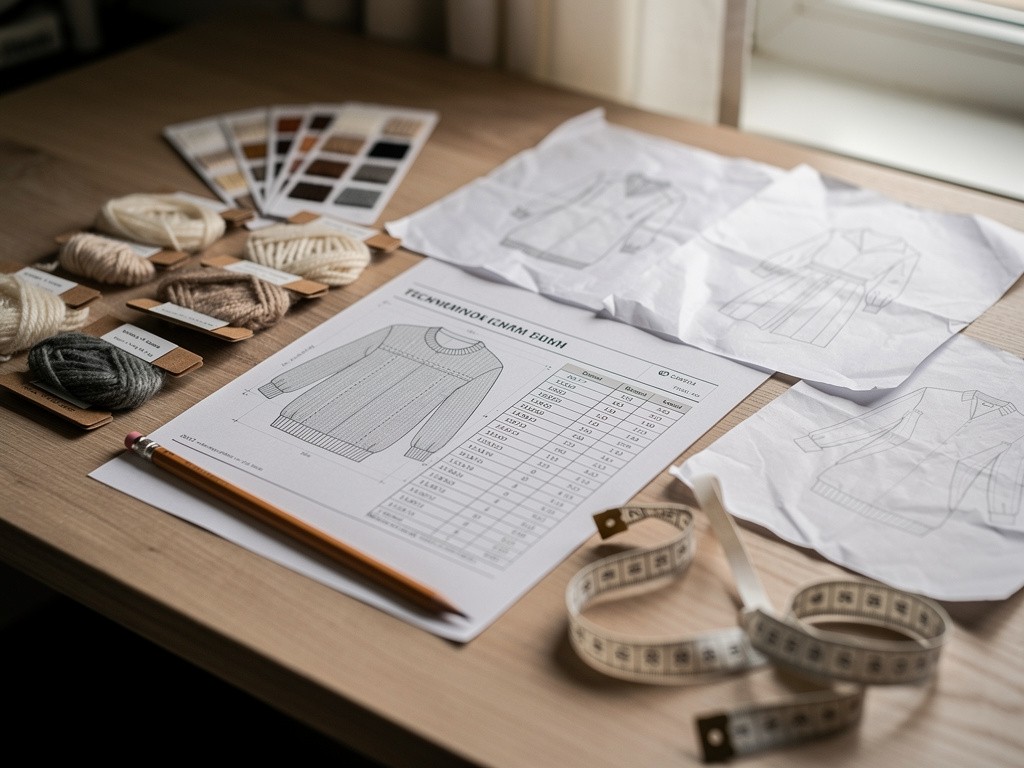
Ever wondered what actually happens between a sketch and the sweater that arrives at your door? Behind every well-made knit lies a detailed, multi-stage journey involving skilled hands, precise machines, and careful quality checks. Understanding this process not only demystifies how sweaters are made—it also helps brands set realistic timelines, communicate better with their factory, and make smarter production decisions. In this guide, we'll walk through the complete sweater production process, step by step, from the very first sample to the final finished piece.
Every sweater begins with a clear plan. Before any yarn is touched, the design is translated into a tech pack—a detailed specification document that includes measurements, stitch types, yarn composition, gauge, color codes, trims, labels, and construction notes.
The tech pack is the shared language between the brand and the factory. The more precise it is, the fewer misunderstandings arise later. This stage sets the foundation for everything that follows, which is why experienced brands invest time here to get every detail right.
With the design defined, the next step is selecting the right yarn. This involves choosing the fiber (such as cotton, wool, cashmere, or a blend), the weight, and the color. Yarn is the single biggest factor in how a sweater looks, feels, and performs, so this decision carries significant weight.
At this stage, dye lots and color matching are confirmed against approved standards. The factory sources the yarn, and any lab dips (color samples) are checked and approved before moving forward.
This is one of the most critical phases. Using the tech pack and selected yarn, the factory produces a sample—a first physical version of the sweater. The sample is used to check fit, measurements, stitch quality, hand-feel, and overall appearance.
Samples often go through several rounds:
· Proto sample — the first version to test the design and construction.
· Fit sample — refined to perfect the measurements and fit.
· Pre-production (PP) sample — the final approved version that represents exactly what mass production should look like.
Only once the PP sample is approved does the order move into production. This step protects both the brand and the factory by confirming expectations before committing to full volume.
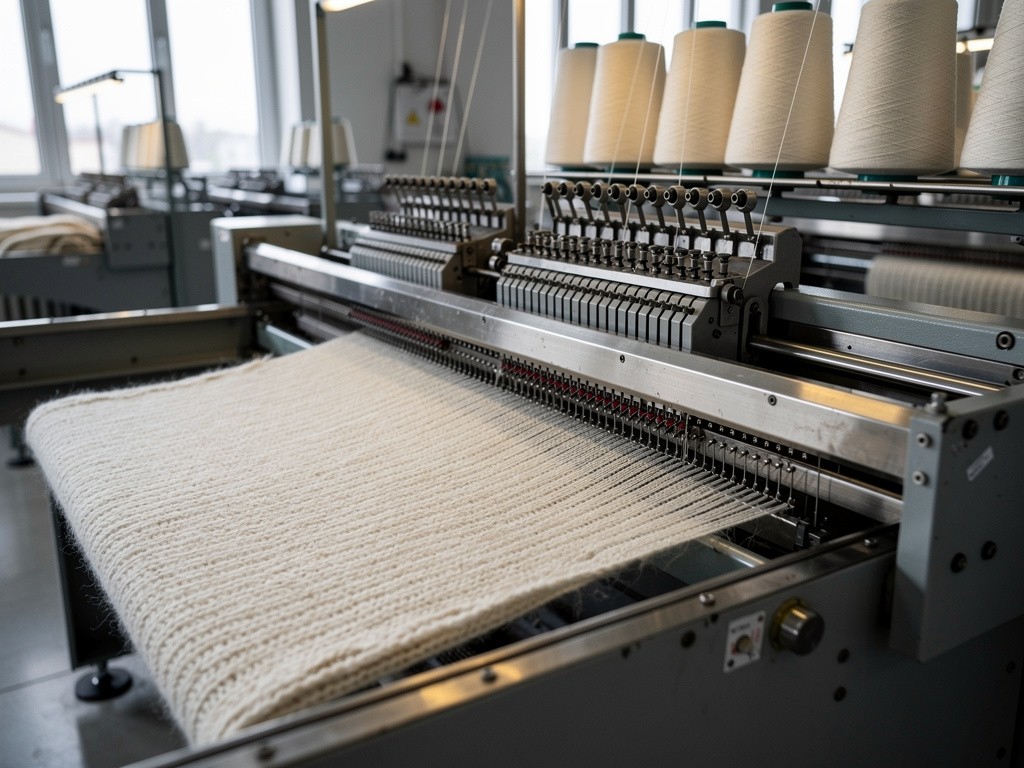
With the sample approved, production begins. Modern sweaters are typically knitted on computerized flat knitting machines, which produce the individual panels—front, back, sleeves, and collar—according to the programmed pattern and gauge.
Depending on the design, sweaters may be fully fashioned (knitted to shape, with minimal cutting and waste) or cut and sewn (knitted as fabric, then cut to shape). Fully fashioned construction is often preferred for quality knitwear because it reduces waste and creates cleaner edges.
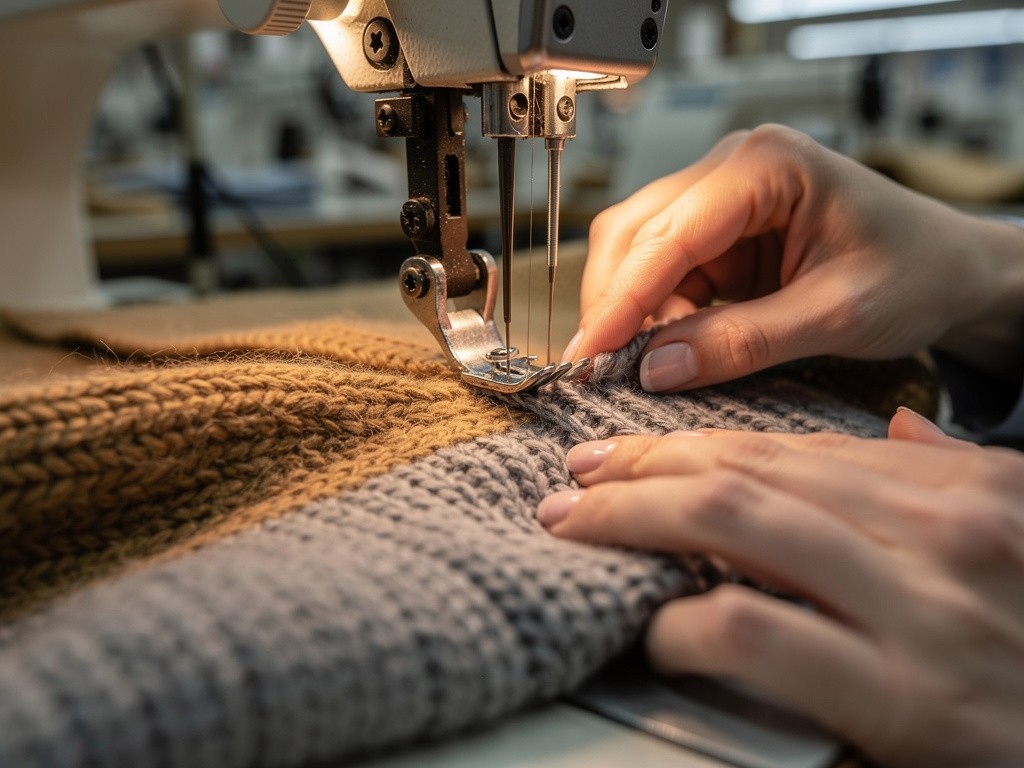
Once the panels are knitted, they need to be joined together. This is done through linking, a specialized process—often performed by skilled workers on a linking machine—where the knitted pieces are stitched together loop by loop for a smooth, durable, and nearly invisible seam.
Assembly includes attaching sleeves, closing side seams, and adding collars, cuffs, and hems. The precision of this stage directly affects the sweater's final fit and appearance, making it one of the most craftsmanship-dependent steps in the entire process.
After assembly, sweaters go through washing and finishing to achieve their final hand-feel and appearance. Washing softens the fibers and can enhance texture, while steaming and blocking shape the garment to its correct measurements and give it a clean, professional finish.
This stage is where a sweater truly takes on its intended look and drape. Proper finishing ensures consistency across every piece in the order.
Quality control runs throughout production, but a thorough final inspection is essential before shipping. Inspectors check measurements, stitch quality, seams, color consistency, and overall appearance, and look for any defects such as loose threads, holes, or irregularities.
Many factories follow AQL (Acceptable Quality Limit) standards to systematically evaluate quality across a batch. Garments that don't meet standards are repaired or rejected. This step is the final safeguard that protects your brand's reputation.
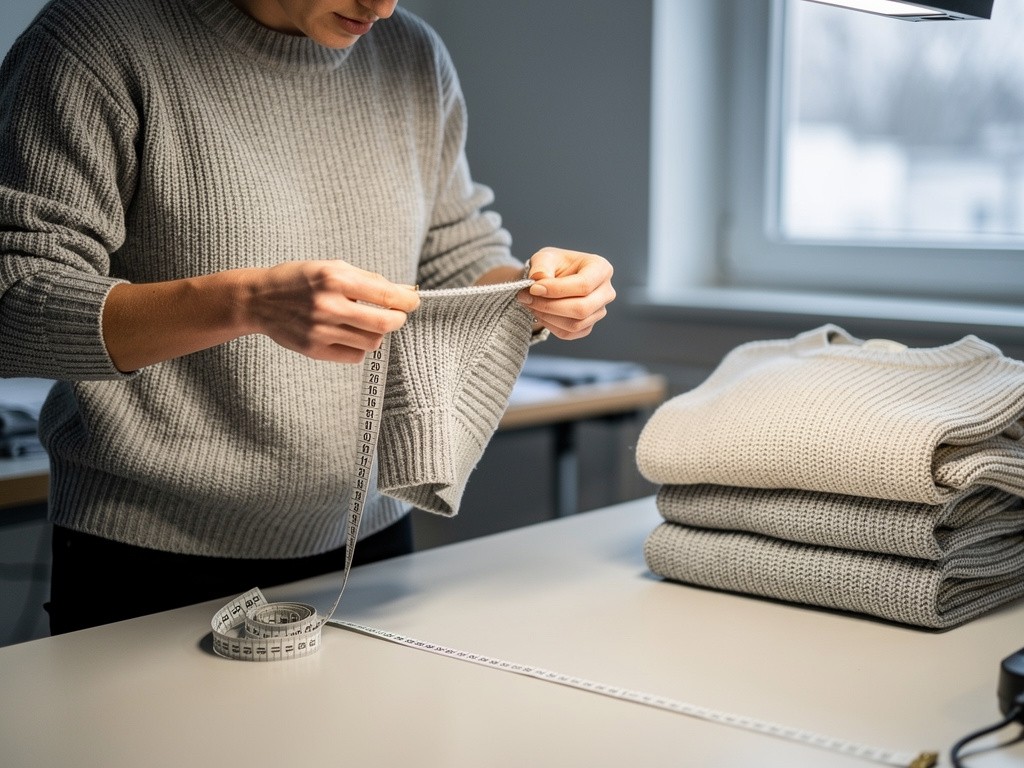
In the final stage, sweaters are trimmed, pressed, and fitted with all necessary labels, hangtags, and care instructions. They are then folded, poly-bagged, and packed according to the brand's specifications and shipping requirements.
Proper labeling and packing aren't just about presentation—they also ensure compliance with import regulations and protect the garments during transit.
Timelines vary depending on complexity, order quantity, and yarn availability, but sampling alone can take several weeks due to multiple approval rounds, while bulk production typically follows over a period of weeks after approval. Building realistic timelines into your planning—and communicating clearly with your manufacturer—helps ensure a smooth launch without last-minute pressure.
Why does sampling take so long?
Sampling involves multiple rounds of refinement to perfect fit, measurements, and quality. Rushing this stage often leads to problems in bulk production, so it's worth the time.
What's the difference between fully fashioned and cut-and-sewn sweaters?
Fully fashioned sweaters are knitted to shape with minimal waste and cleaner edges, while cut-and-sewn sweaters are cut from knitted fabric. Fully fashioned is often associated with higher-quality knitwear.
What is a PP sample?
A pre-production sample is the final approved reference that represents exactly how bulk production should look. Production only begins after it's signed off.
Can I visit or monitor the production process?
Many factories welcome communication and updates throughout production, and a transparent partner like VSCOO will keep you informed at every key stage.
A great sweater is the result of many careful steps working in harmony—from a precise tech pack and the right yarn, through meticulous sampling, knitting, linking, finishing, and inspection. Understanding this journey helps you appreciate the craftsmanship behind every piece and work more effectively with your manufacturing partner.
Expert Custom Knitwear Manufacturer

MOQ 100 pcs/style. Response within 24 hours.
Get a Free Quote